








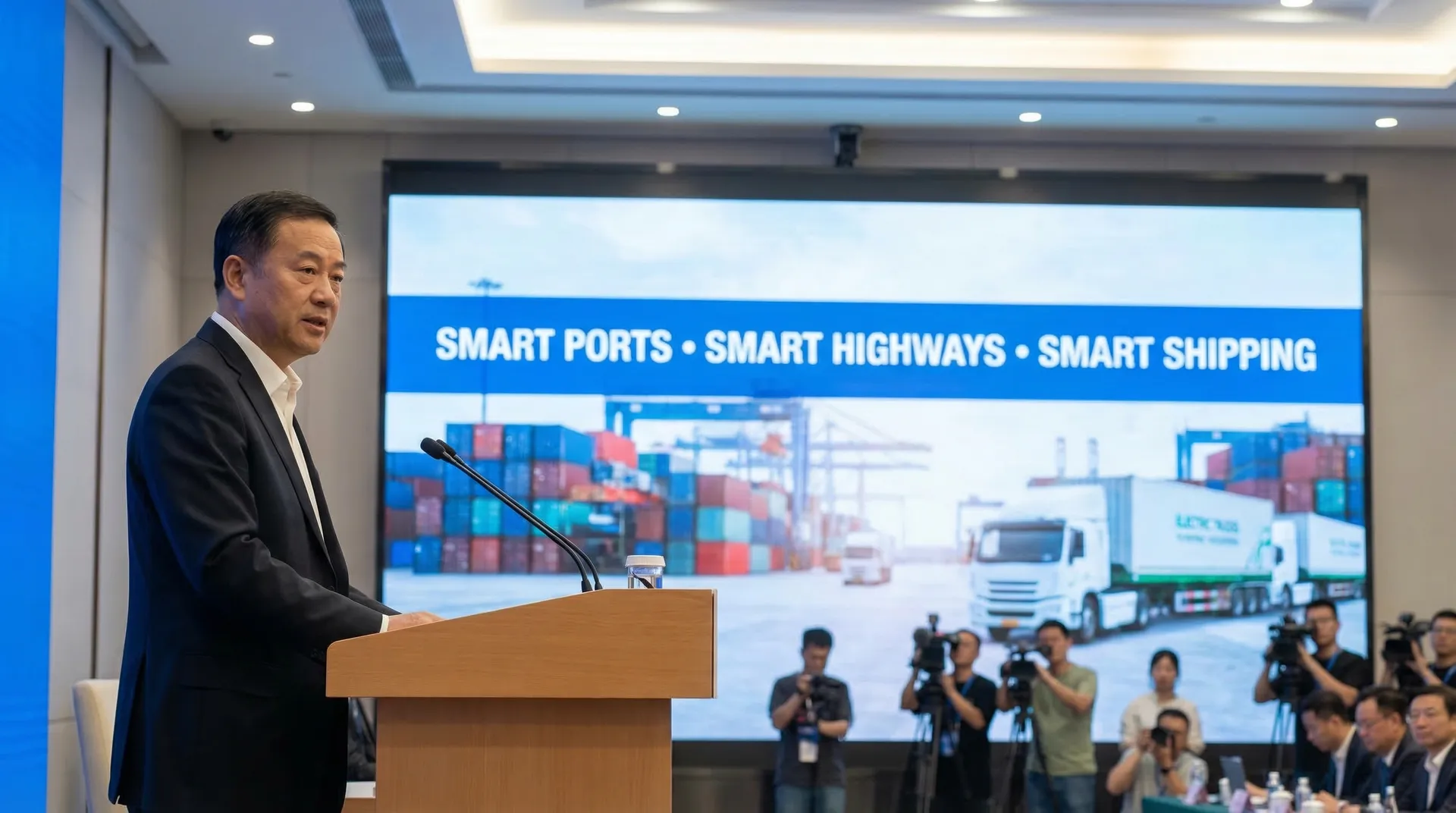
China is formalizing the transport agenda for the period 2026-2030 as a technology project. Transport Minister Liu Wei said that the country will promote the digital and green transition of the transport sector within the framework of the 15th five-year plan, and one of the pillars will be the introduction of artificial intelligence into infrastructure and flow management.
The most important areas for logistics are explicitly named. In the next five years, China plans to "land" AI in transportation systems and accelerate the construction of digital circuits at key hubs. In the wording of the minister, it sounds like this:
"Over the next five years, the country will promote the application of artificial intelligence in the transport sector and work on the development of smart highways, smart ports and smart shipping.” Said Liu Wei.
For the foreign economic activity and container logistics market, this is a signal that port handling and land-based arms will increasingly rely on predictive planning, digital dispatching, end-to-end equipment monitoring and automated processing window solutions. When smart ports become a government goal, the introduction of electronic services accelerates, data standardization increases, and pressure increases on chain participants who work "manually."
The green part of the agenda is also spelled out specifically. China says it is promoting zero-carbon corridors and stations, as well as expanding the use of clean energy technology, including new energy vehicles and ships. This is gradually changing the economics of internal logistics: more electrification on highways, more requirements for charging availability, more projects on port equipment and fleet.
The Minister cited an indicative indicator of infrastructure readiness:
“Currently, the coverage of charging stations in motorway service areas across the country has reached 98.8 percent.” he noted, adding that the capacity of high—power charging points will be increased this year in order to reduce waiting times.
There is also a large-scale context that is important for express logistics and marketplaces. Liu Wei emphasized the workload of the postal and courier segment:
“About 550 million parcels are processed every day across the country.” This is an indicator that explains why transport digitalization in China is directly related to foreign trade and the speed of deliveries.
For companies working with China, the conclusion is practical. On the horizon of 2026-2030, the role of correct electronic batch and route data will increase, and those who can quickly adapt to the requirements of port and transport IT circuits will have advantages: statuses, identifiers, requirements for preliminary information, and machine risk verification. In this model, the speed of delivery is increasingly determined by the quality of the data, and then by the number of people on the line.